A Calendar For All Times
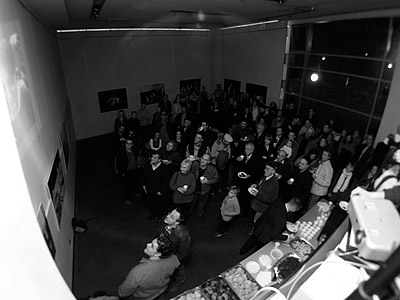
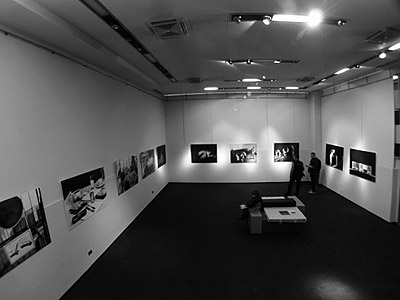
A calendar is an unavoidable place of our orientation in time: this is where we note the days and hours of our meetings, planned tasks, appointments, birthdays, saints – all equalized into a sequence of abstract dots on a segmented timeline. A calendar implies a rational, calculated attitude towards life. Calendars are used by those who are masters of their time, who do not waste it, who do not let the grass grow under their feet. Because, as we all know, time is money. The time, an amorphous duration, is transformed by calendars into a sequence of measurable units (month and days). To this rational, mathematical, countable (and accountable) world, the authors of this calendar subversively contrast 12 photographs – irrational, absurd, disordered, upside down. An ironical, witty commentary of modern life and its phenomena: comment of the world deafened by cacophony of information and networked by multi-directional communications channels, presented through a little girl who, instead of listening to a mobile phone, listens to silence coming from a seashell pressed against her ear. Or preoccupation with money and profits and aggressive attacks on consumers through a multitude of newspaper contests, which are visually screaming even in the idyllic, innocent atmosphere of early morning coffee in one of the city coffee bars. All the photographs are staged, with carefully chosen protagonists and props. The comment in those photos is discrete, hidden under seemingly quite ordinary, sometimes even idyllic genre scene, presented only through a single detail. Even the process used to create those photographs is opposed to the frenzied rhythm of the modern times, being too slow for the rush which we witness daily: taken with a wooden view camera, using large negatives with a specially prepared emulsion of the finest grain, some of them took up to 40 minutes to develop. The computer, which is for the author of these photos a symbol of that technocratic, cold, alienated and hurried world, has been eliminated from the photographic process, deliberately replaced by the "classic" forms of intervention into reality: arranging of otherwise incompatible objects, distortion of the scene through thick lenses, by placing the characters into strange, sometimes bizarre situations. Unlike the aggressive and highly sophisticated high-tech world, a perfect, actually artificial world, cosmetically processed using a computer, the authors of this calendar offer another picture: a soft one, intimate, warm, rich in tone gradation and nuances, in which a comment is presented discretely, inconspicuously, but with style. The days are numbered for all of us, but the photos are eternal. That's why this calendar is for all times. Maša Štrbac |
||
|
My name is ROBERT REBERNAK, and I am a designer, Our calendar is REALLY black and white. Not only that, |


nightmare

svako jutro...snagu daje

non pasaran

vrati se

petrovo uho

sound & vision

dig in the dirt

radio cat

parenje dvokrilaca

metroseksualac

the power of bubbles

bajke i vilenjaci
Site content copyright © 2005. Mario Majcan & Robert Rebernak.